
There’s something strangely comforting about doing repetitive handwork while watching a long-running series. Maybe it’s because both require patience. Cross-stitching, especially, has become that for me lately: tiny X’s slowly forming into something recognizable while dialogue fills the background.
Sometimes I don’t notice that I’ve stopped stitching because of an emotional or funny scene.
This time, the backdrop was Gilmore Girls. It was my second rewatch, and somehow watching it older changed everything.
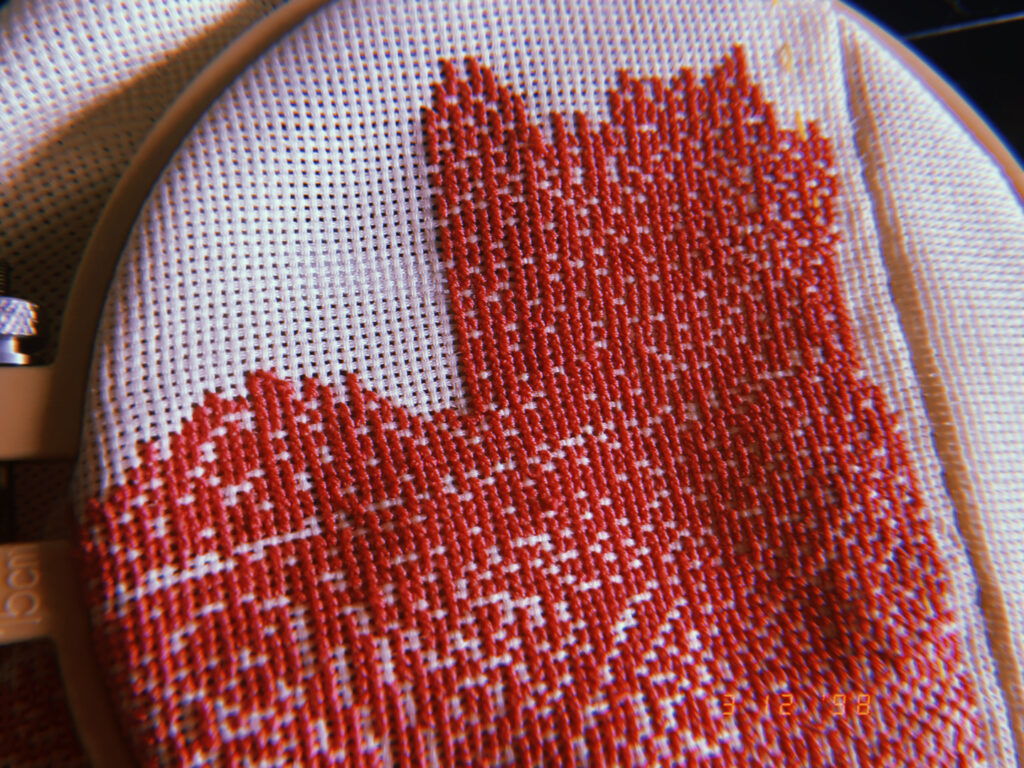
Around this point in the piece, I stopped relying on the 10×10 blocks and started following the individual X’s instinctively. The pattern became slower but strangely more immersive, which felt fitting while rewatching Gilmore Girls. Maybe because the second watch itself felt like that too: less structured, less romanticized, more attentive to the tiny details I had ignored the first time around.
This was also the section where I realized I had cut the fabric too short and had to stitch parts of it back together. It felt oddly appropriate while watching a show so obsessed with fractured relationships, growing pains, and people trying to patch things together after realizing they’ve made mistakes.
If you reached this point because you’re here for my cross-stitch log, you can click out now. The next portion of this is me rambling about the characters of Gilmore Girls. Warning: Spoilers ahead!
Paris Geller
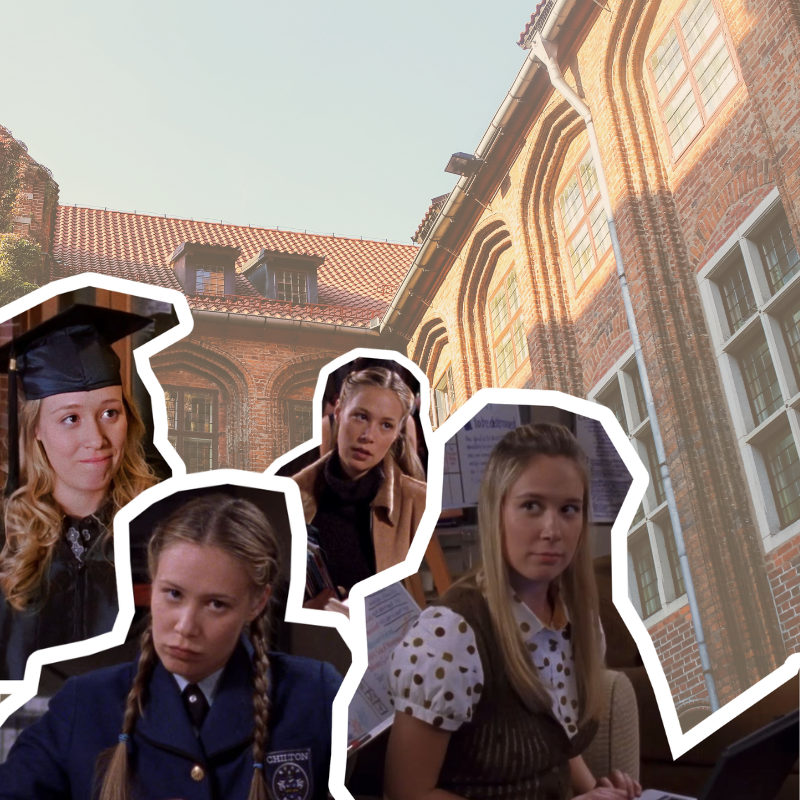
One of the biggest shifts for me was Paris Geller. During the Chilton years, especially, I kept thinking: how can someone so intelligent lack so much emotional awareness? She’s academically brilliant, strategic, disciplined, and hyper-aware of how the world works academically, but emotionally, she’s chaotic and defensive. Watching her during the college application era made me realize how deeply fear drives her — fear of failure, fear of losing, fear that someone like Rory, naturally liked and effortlessly admired, could outshine someone who worked ten times harder.
And yet, older me appreciated Paris more. Unlike Rory, Paris never seemed delusional about success. Even with privilege and wealth, she understood that achievement still required structure, planning, discipline, and effort. Honestly, if Paris existed today, she would have had the most terrifyingly efficient Notion workspace imaginable. Color-coded databases, ten-year plans, contingency systems, backup career paths, failure analysis trackers — the works. The older I get, the more I understand that energy. Not romanticizing success, but engineering it.
Mrs. Kim
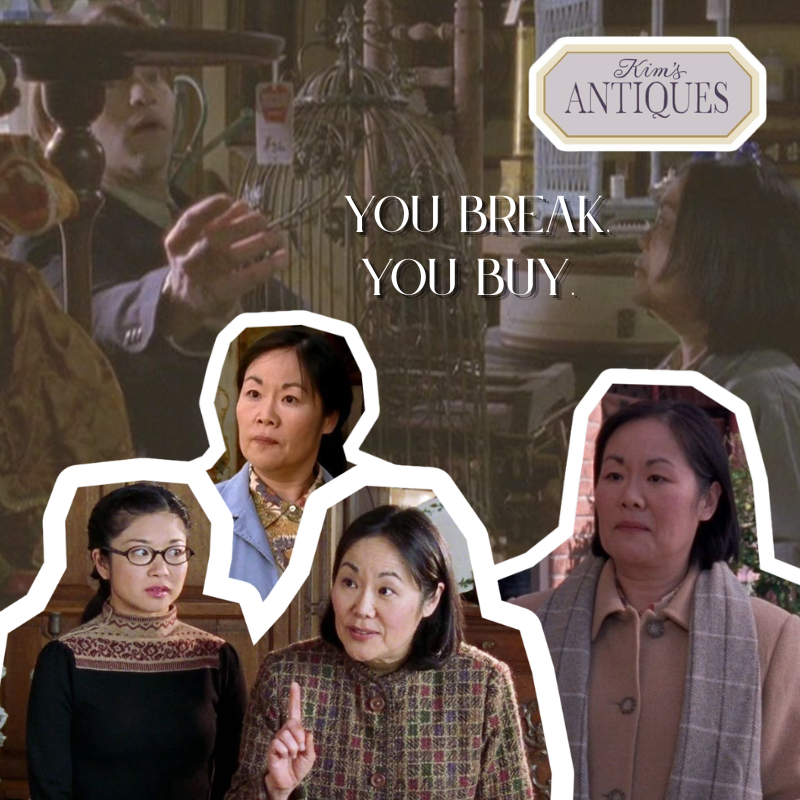
Mrs. Kim changed completely for me on rewatch too. Early seasons Mrs. Kim felt like an iron wall: rigid, strict, terrifying. Watching Lane hide CDs under floorboards felt more stressful than funny this time around. But later seasons Mrs. Kim became unexpectedly hilarious to me, especially when she slowly starts retracting from her ultra-strict parenting while still remaining entirely herself. There’s something deeply funny about Lane being paranoid about marriage arrangements (I’m talking about the marriage jug!) while Mrs. Kim awkwardly attempts flexibility in the most intense way possible.
She never transforms into a soft parent; she just bends slightly, and somehow that tiny shift feels enormous. It made me think about how some parents only know how to love through control because that’s the only language they were ever taught.
At some point during the rewatch, I got tired of comparing Rory’s boyfriends. Every discussion online eventually turns into Dean versus Jess versus Logan, but honestly, I realized my favorite characters were Luke and Sookie because they felt the most human. Not perfect, just grounded.
Sookie and Luke
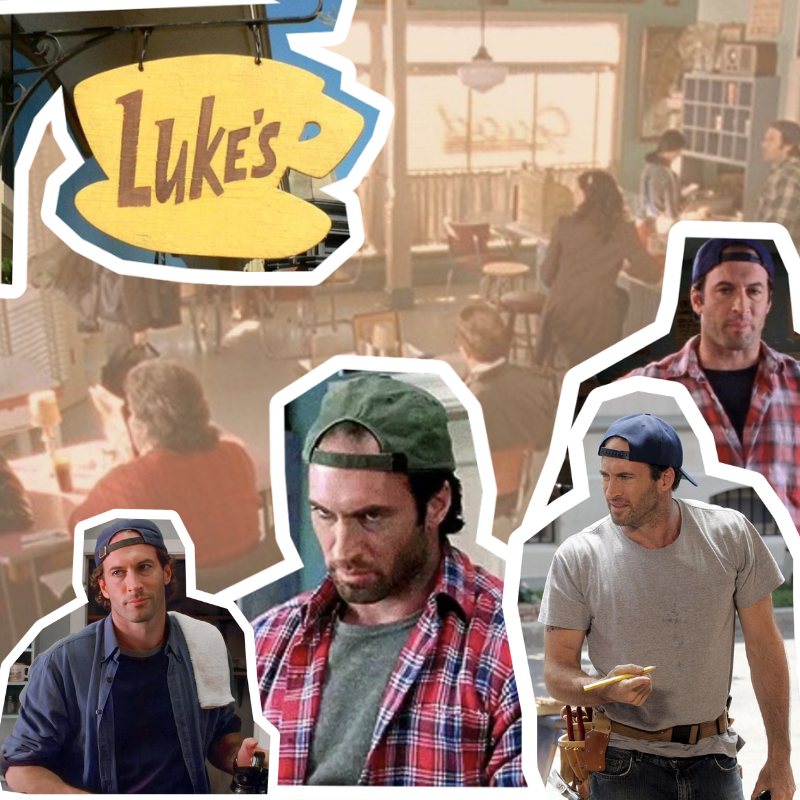
Jess
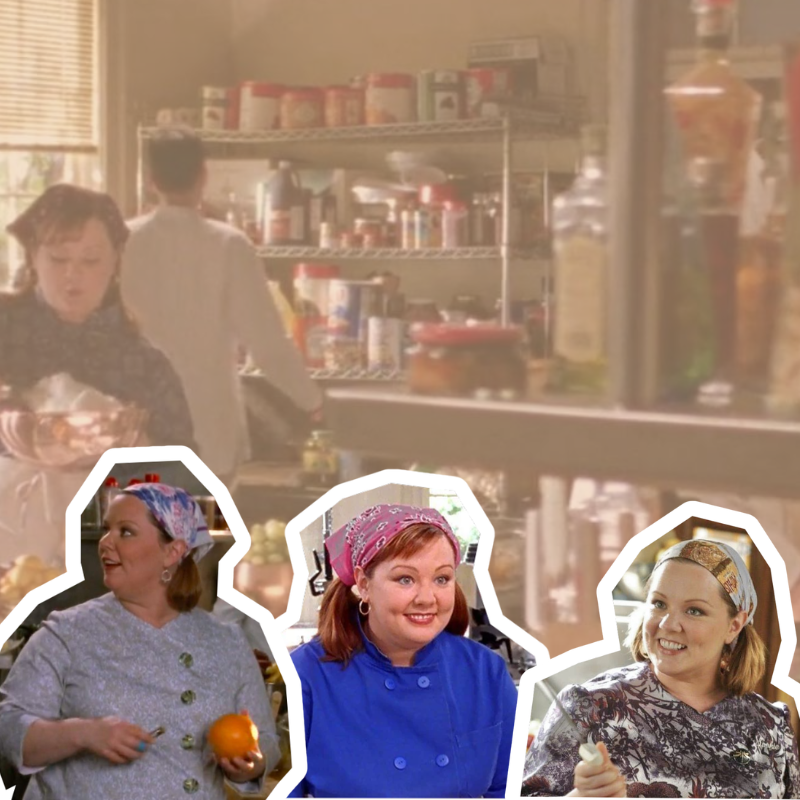
Sookie feels like emotional warmth. She’s chaotic in the kitchen but emotionally sincere, and there’s something comforting about how openly caring she is. She’s literally Lorelai’s one call away. I keep thinking about that episode where she could barely keep her eyes open, yet still showed up for Lorelai anyway. I have a soft spot for Sookie because she reminds me of my mom growing up — deeply passionate about what she does and the kind of person who feels like she gives warm hugs.
Luke, meanwhile, became even more compelling to me as an adult viewer. Underneath the grumpy exterior is someone deeply dependable. He doesn’t always communicate well, but he shows love through consistency: fixing things, showing up, quietly taking care of people. I also realized during this rewatch that I see my father in Luke. Grumpy, yes, but he does things for you anyway. He doesn’t always know how to control his emotions, but he apologizes when he realizes he may have acted harshly.
Watching older made me realize that Luke and Jess mirror each other in some ways. Jess feels like what Luke could have become if he had never matured, while Luke feels like what Jess becomes if he heals.

That’s why Jess surprised me so much during this rewatch. I had forgotten the moment where he returns having written a book and quietly built a life for himself. Suddenly it hit me that he actually did the work. He didn’t rely on charm or stay trapped in self-pity forever (ehem Rory). He left, figured himself out, and built something real. There was something deeply satisfying about that, especially compared to Rory’s drifting.
And that’s where my feelings about Rory became more complicated.
When I was younger, I saw Rory as aspirational. Now I see someone who was so protected and praised that she delayed becoming her own person. Watching A Year in the Life again made me realize how much of her adulthood feels like delayed adolescence. She had privilege, opportunity, education, and support, but not necessarily guidance on how to truly define herself outside of achievement.
Lorelai and Rory
Lorelai understood exactly what Emily and Richard’s world was and consciously rejected it. Rory never fully did. She floated between worlds, benefiting from privilege while convincing herself she wasn’t shaped by it. When things became difficult, she slipped very easily into the comfort of wealth, structure, and safety. Watching the Yale dropout arc older felt completely different. It no longer looked like a simple rebellion; it looked like an identity collapse.
I started feeling bad for her. Not because her choices were excusable — the cheating with Logan still frustrated me deeply — but because I realized Rory never really had space to fail early. She was the good kid, the gifted kid, the responsible one. Her existential crisis arrived late.
Maybe that’s why adulthood hits her so hard.
People who don’t learn resilience through early failure sometimes collapse harder later. While watching, I found myself reflecting on my own life and realizing that not having everything handed to me forced me to adapt. It forced me to become resourceful and figure things out even when it was uncomfortable. Maybe struggle creates urgency. Maybe having no safety net forces identity to form faster.
That realization also changed how I viewed Lorelai. I still love her, but rewatching older complicated her for me, especially during the Luke breakup. The first time I watched it, I mostly sided with her. This time I saw both of them failing each other.
Luke was suddenly thrown into fatherhood after losing twelve years with April. Of course, he panicked. Of course, he shut down emotionally and became obsessed with not messing things up. Anna Nardini drove me insane during those episodes, but I also understood why Luke became so desperate and overwhelmed.
Meanwhile, Lorelai became impatient and emotionally reactive in ways I hadn’t fully acknowledged before. There were moments where she felt pushy and overwhelmed by losing control of the future she imagined. Realizing that hurt because I think I had idealized her during my first watch. But maybe adulthood is also realizing that charming people can still behave poorly under pressure.
Still, I admire Lorelai deeply because unlike Rory, she consciously built herself. She understood the insanity of wealth, status, and emotional control and chose uncertainty over comfort. That takes courage. Maybe that’s the core difference between mother and daughter: Lorelai chose who she wanted to be, while Rory delayed choosing.
One thing I loved revisiting was the Friday night dinners. The endless cycle of fights, sarcasm, passive aggression, temporary reconciliations, and repeated emotional tension somehow became one of the most comforting parts of the show particularly that episode where the seemingly endless loop of fight, reconciliations, laughter, and repeat. That’s family sometimes: people hurting each other and still showing up every week anyway.
I found it especially meaningful when the dinners continued even after Yale tuition no longer depended on Emily and Richard. Once the financial obligation disappeared, the dinners stopped feeling transactional and became something messier and more emotional. A family choosing to remain connected despite everything.
The Third Gilmore Girl
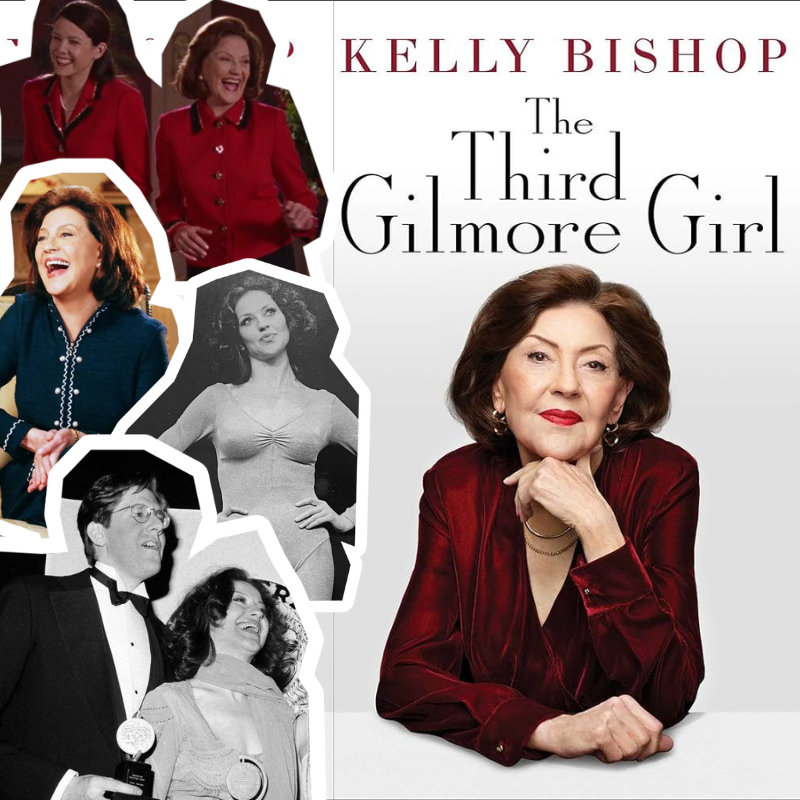
After finishing A Year in the Life, I felt like I still hadn’t had enough of this cast, so I dove deeper—watching a bunch of interviews until I found out that Kelly Bishop (Emily Gilmore) wrote a memoir.
I started reading her book, and suddenly my thoughts drifted beyond the show entirely. There’s something fascinating about reading someone reflect honestly on the life they built. She’s the real Rory Gilmore in a way — her mother made something of herself, and her grandmother was basically her Emily Gilmore.
When I learned that she never had children, I found myself reflecting on my own life. Not in a dramatic way, but in an observational way. I always talk about waiting for the “right time” for children, but life always seems to exist in some kind of instability. You’re building your career, then the economy collapses, then you recover, then you want freedom, then the world becomes uncertain again. There’s always something.
As I kept reading, I realized I wasn’t necessarily afraid of children so much as aware of what parenting truly demands. I’ve built routines and work rhythms that fit who I am now, and I started wondering whether some people simply realize they love children more from afar than as parents. Maybe understanding your own limits is also a form of maturity.
I still don’t fully know what I think about any of it, but memoirs do that. They make you accidentally reflect on your own life while reading someone else’s.
Maybe that’s why this rewatch felt so different. I wasn’t just watching Gilmore Girls. I was stitching, thinking, reflecting, comparing timelines, comparing identities, and thinking about privilege, failure, adulthood, creativity, and what it means to consciously build a life.
Every character started feeling less like television archetypes and more like people carrying different wounds and coping mechanisms. And maybe that’s why the show remains charming despite all its flaws. Beneath the coffee jokes and fast dialogue, it’s really about people trying to figure out who they are—some earlier, some later, some gracefully, some messily.
Kind of like the rest of us.
And somewhere between following cross stitch pattern and listening to another Friday night dinner argument, I realized that maybe rewatches aren’t really about revisiting the show at all.
Maybe they’re about revisiting yourself.
To wrap this all up, this was my favorite line from Kelly’s book:
“That used to be me up there.” Then suddenly, the same thought hit me with the greatest wave of joy and gratutude: “That used to be me up there!”.
…To this day, when I occasionally dall into that sadness trap, I think back on that night and that lesson: Dont cry because you think your best days are gone. Smile because you had them in the first place


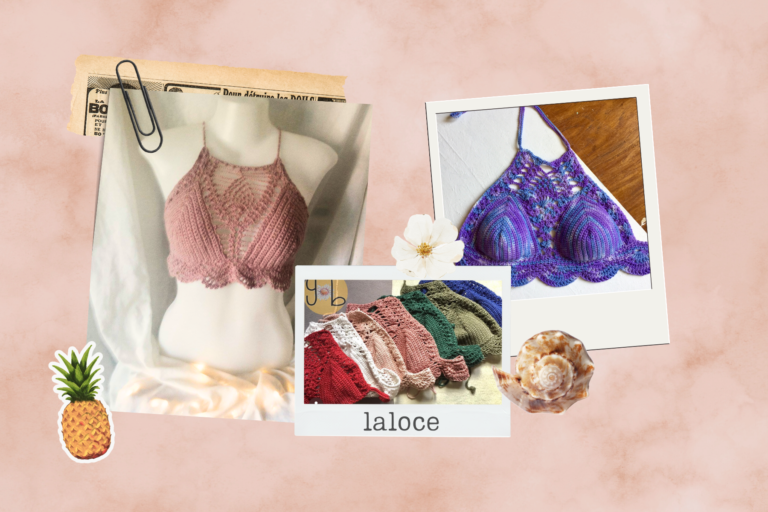
[…] episodes of Gilmore Girls playing in the background. (More of that Gilmore Girls rambling here) hands moving almost automatically. But somehow the collages themselves found their own structure. […]